Small Steps Create Big Shifts: Industry, Minerals and Global Supply Chains
Analysis from the International Energy Agency (IEA), the World Nuclear Association (WNA) and the OECD Nuclear Energy Agency (NEA) indicates that more than 50 nuclear reactors are currently under construction globally, with uranium and nuclear-aligned material demand rising faster than existing supply-chain capacity. This renewed phase of nuclear expansion is being driven by energy security, electrification, digital infrastructure growth, defence requirements and advanced reactor deployment, alongside climate policy.
For Australia, this represents one of the most consequential industrial opportunities of the coming decades. While Australia does not operate nuclear power plants, global analysis increasingly identifies materials supply, fuel-cycle capacity and industrial throughput as the binding constraints on nuclear expansion.In this context, participation in nuclear-aligned industries is not determined by domestic reactor deployment alone, but by the ability to contribute to the interconnected global supply chains that underpin nuclear programs internationally.Viewed through this lens, Australia’s world-leading reserves of uranium, zirconium and rare earth elements, combined with established engineering, manufacturing and logistics capability, position us not just as a material role player, but in the nuclear-aligned industries now forming globally, independent of its domestic energy posture.Australia’s Position in Nuclear-Aligned Materials and Supply Chains
Within this global context, Australia occupies a distinctive position. It holds a significant share of the world’s known uranium resources, is a leading producer of zircon-bearing mineral sands, and possesses meaningful reserves of rare earth elements and other specialty metals relevant to nuclear-aligned industries. These materials underpin critical components of nuclear systems, from fuel assemblies and control mechanisms to advanced alloys and high-performance applications across energy, defence and digital infrastructure.Importantly, participation in these supply chains is shaped not only by resource endowment, but by production capability, processing capacity, regulatory confidence, logistics, quality assurance and workforce readiness. As nuclear programs expand internationally, demand is increasingly directed toward jurisdictions able to provide reliable, long-term supply within trusted industrial and governance frameworks.Viewed through this lens, Australia’s relevance to nuclear-aligned industries is not defined by domestic reactor deployment, but by its ability to contribute to the global supply chains that support nuclear programs worldwide. This positions Australia as a potential long-term participant in nuclear-aligned materials and industrial systems as they continue to develop.From Resource Position to System Participation
As nuclear expansion accelerates globally, these materials — uranium, zirconium, rare earth elements and associated inputs — are increasingly recognised as enabling components of a broader nuclear ecosystem, rather than standalone commodities. This has reinforced Australia’s relevance as an upstream supplier at a time when fuel-cycle and materials capacity are emerging as binding constraints on nuclear growth.This position is already reflected in international engagement. Australia has entered into formal critical-minerals cooperation frameworks with the United States, recognising Australia as a trusted supplier . These arrangements underscore Australia’s role in contributing to global industrial systems, but can we go beyond simple export relationships.Participation needs to evolve, rather then just remain at the concentrated point of extraction, and extended across processing, industrial capability, workforce development and system integration as global nuclear supply chains mature.From Opportunity to Readiness: Why Industry Coordination Matters
Nuclear energy is no longer just about power plants. It is driving growth across resources, advanced manufacturing, defence, digital infrastructure, medicine and clean technology — all sectors where Australia already has capability, but where alignment and coordination increasingly shape outcomes.For Australia, this moment represents:A chance to diversify beyond traditional commodity cyclesAn opportunity to embed Australian capability into global nuclear supply chainsA pathway to build long-term industrial resilience and sovereign capability
ANWIN exists to support informed engagement with this landscape.Organisations interested in understanding how their capabilities intersect with emerging nuclear-aligned supply chains are encouraged to engage with ANWIN’s ongoing analysis and industry mapping work.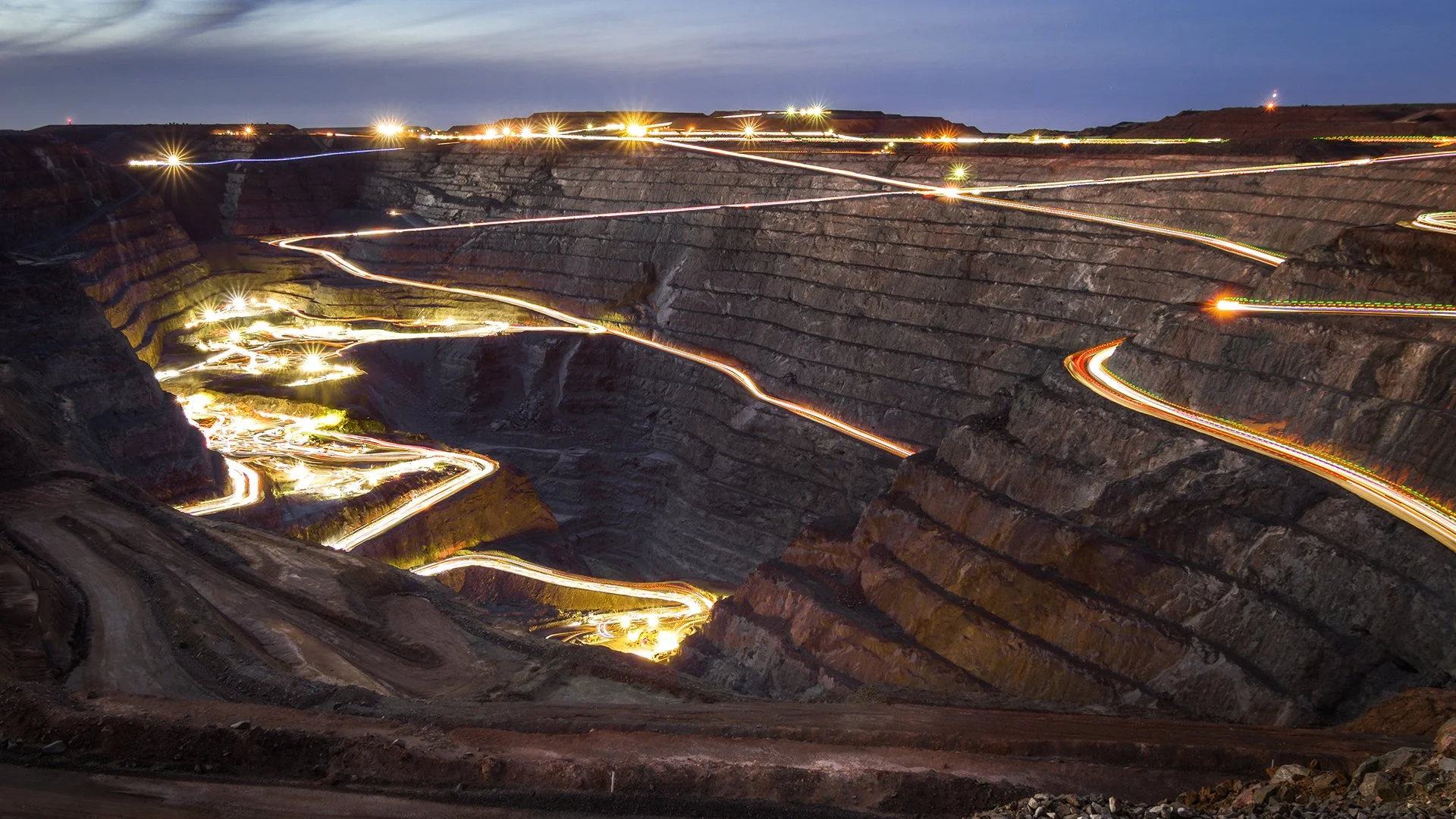
An open-pit mining operation photographed at night, symbolising Australia’s upstream role in global supply chains for critical materials that support nuclear-aligned and advanced industrial systems.
Sources and References
Small Steps Create Big Shifts: Industry, Minerals and Global Supply Chains
International Energy Agency (IEA) — World Energy Outlook and nuclear capacity outlooks
https://www.iea.orgWorld Nuclear Association (WNA) — global reactor construction status, uranium demand, fuel-cycle analysis
https://www.world-nuclear.orgOECD Nuclear Energy Agency (NEA) — nuclear supply chains, industrial capacity constraints and workforce analysis
https://www.oecd-nea.orgInternational Atomic Energy Agency (IAEA) — nuclear fuel cycle, reactor deployment and materials demand
https://www.iaea.orgGeoscience Australia — uranium, zirconium, rare earth element reserves and mineral resource assessments
https://www.ga.gov.auMinerals Council of Australia — uranium, critical minerals, and Australia’s role in global energy and industrial supply chains
https://www.minerals.org.auAustralian Government – Department of Industry, Science and Resources — Critical Minerals Strategy and supply-chain resilience
https://www.industry.gov.auAustralian Government – Department of Foreign Affairs and Trade (DFAT) — Australia–United States Critical Minerals Cooperation frameworks
https://www.dfat.gov.auUnited States–Australia Climate, Critical Minerals and Clean Energy Partnership — bilateral cooperation announcements and frameworks
https://www.whitehouse.govWorld Nuclear News — reporting on global nuclear expansion, fuel-cycle constraints and industrial participation
https://www.world-nuclear-news.orgOECD — industrial throughput, trusted supply chains and governance frameworks in strategic sectors
https://www.oecd.org