Australia Nuclear Submarine Program and South Australia’s Leading Role
Australia is embarking on a historic endeavour to acquire nuclear-powered submarines under the AUKUS partnership, with South Australia positioning itself as the nation’s key “Defence State” for this high-tech enterprise.
In September 2021, Australia joined the trilateral AUKUS security pact with the US and UK, pivoting from diesel subs to nuclear-powered submarines for the Royal Australian Navy. Under the AUKUS “optimal pathway” announced in March 2023, Australia plans to build at least eight conventionally armed, nuclear-powered submarines by the early 2040s. This will make Australia one of few nations operating SSNs (nuclear-powered attack submarines), marking “the most significant industrial and technical endeavour in Australia’s history”. The AUKUS subs are expected to combine British design and American technology (dubbed “SSN-AUKUS”), and initial phases may include Australia acquiring a few US-built Virginia-class submarines in the 2030s as a stopgap. Alongside acquiring subs, AUKUS involves a whole-of-nation effort to develop the necessary infrastructure, workforce, and regulatory framework for nuclear stewardship. Australia has already stood up new organisations, notably the Australian Submarine Agency (ASA) in July 2023 – to oversee the program, and passed legislation to establish an independent Naval Nuclear Propulsion Safety Regulator to enforce the highest nuclear safety standard. Building a Homegrown Nuclear Submarine Supply Chain
AUKUS is not just about buying submarines, it’s about building sovereign capabilities and a domestic supply chain to sustain them. A core focus is expanding Australia’s industrial base so it can eventually construct, maintain, and fuel nuclear-powered subs onshore. To this end, the government released an AUKUS Submarine Industry Strategy in 2025 outlining how to grow a “robust, internationally integrated supply chain” for the SSN program. One key element is qualifying Australian companies to contribute parts and services, not only for future local builds but even into US and UK submarine programs. For example, the ASA contracted HII – America’s largest naval shipbuilder (Newport News) – to run an Australian Submarine Supplier Qualification (AUSSQ) pilot program. Under this A$9.6 million pilot, HII’s Australian division is identifying and auditing local suppliers against the stringent standards of US Navy sub components. In August 2025, as quoted by Defence SA, the first cohort of 12 Australian businesses (including four from South Australia: Intercast, Castech, Axiom, and Supashock) was shortlisted to undergo capability testing for entry into the US submarine and aircraft carrier supply chains. Companies that qualify can bid for contracts with HII’s American shipyards, a huge opportunity to “elevate local expertise to global standards” and embed Aussie manufacturers in the broader submarine enterprise. This effort is supported by H&B Defence, a new joint venture formed in 2024 between HII and Britain’s Babcock International to drive trilateral supply chain integration under AUKUS.Australian industry is responding enthusiastically to these initiatives. According to ASC (Australian Submarine Corporation), a recent call for expressions of interest in AUKUS subcontracts drew an overwhelming response from local suppliers eager to participate. Meanwhile, state governments are courting global defence primes to invest locally. In early 2025, Western Australian Government signed an agreement with General Dynamics (the US parent of Electric Boat, builder of Virginia-class subs) to help fast-track WA companies into the sub supply chain and boost workforce skills in Perth This coincides with federal plans to spend tens of billions upgrading Perth’s Henderson naval shipyard and establishing a new submarine maintenance facility there, which together will support about 10,000 jobs in WA. In parallel, partnerships with key technology providers are being struck, for instance, the Australian government confirmed that the UK’s Rolls-Royce Submarines will supply the nuclear reactor power plants for the AUKUS submarines. To leverage Rolls-Royce’s 65+ years of nuclear expertise, the South Australian Government signed a landmark agreement with the company in 2025 to collaborate on workforce training and technology transfer for the AUKUS program. As Rolls-Royce expands its UK reactor production capacity for AUKUS, it is also working with Australian officials to co-design training initiatives and plug critical skill gaps (e.g. nuclear engineering, welding, radiological safety).
South Australia: The “Defence State” Embracing Nuclear Submarines
South Australia (SA) has emerged as the flagship state for Australia’s nuclear-submarine ambitions. Often dubbed “the Defence State,” SA already hosts major naval shipbuilding at Osborne, Adelaide – where the Air Warfare Destroyers were built and new frigates are under construction. Beyond industrial activity, South Australia has been at the forefront of Australia’s nuclear policy conversation, which bodes well for its leadership in the submarine domain. SA has significant uranium mining and once examined hosting international nuclear waste, so its public discourse on nuclear issues is relatively mature. Back in 2016, a bipartisan state Royal Commission even recommended that SA consider nuclear fuel recycling and storage to capitalize on its geology. While Australia’s federal ban on civil nuclear power remains in place, there is growing pressure – including from some SA politicians – to rethink these settings in light of AUKUS. The prospect of nuclear submarines operating from SA has prompted calls to modernize regulations and perhaps eventually allow civilian nuclear industries to develop in support. For example, South Australian senators from the opposition have argued that if the nation trusts sailors to run reactors at sea, it should also explore nuclear energy on land to enhance energy security and skills continuity. So far the federal government maintains the nuclear submarine program will be strictly military-only, but SA’s enthusiasm is clearly influencing the national debate. At minimum, policy reforms have already occurred to facilitate AUKUS: Parliament passed the Australian Naval Nuclear Propulsion Act 2024 to exempt the submarine program from old prohibitions and ensure activities like training, maintenance, and waste handling can legally proceed. South Australia is positioning itself as the logical locale for any future nuclear support facilities as well – from reactor component workshops to spent fuel storage. Indeed, experts note that a long-term disposal site for submarine reactor waste will likely be required on Australian soil by mid-century, and SA’s outback could be a candidate (given its past interest in hosting a national radioactive waste repository). Outlook: Opportunities and Challenges Ahead
Australia’s nuclear-submarine program is steadily moving from planning into implementation. South Australia stands at the forefront of this journey, eagerly transforming itself into the nation’s nuclear-sub hub. The state’s proactive approach – embracing workforce development, courting global partners, and pushing the envelope on nuclear readiness – provides a valuable case study. If successful, SA will not only build submarines but could become the springboard for broader nuclear industry growth in Australia, from advanced manufacturing to nuclear energy research. There are still significant challenges on the horizon: scaling up a skilled workforce fast enough, ensuring supply chain security for specialized reactor components, managing nuclear waste responsibly, and maintaining political and public support over a multi-decade timeline. Yet, the momentum is clear. With AUKUS partners backing Australia and domestic industry rising to the occasion, the country is poised to enter the elite club of nuclear submarine operators. For members of organizations like ANWIN (who have a stake in nuclear industry development), these are exciting times – opportunities are emerging up and down the supply chain, not just in South Australia but nationwide. The coming years will see Australian companies and workers at the cutting edge of naval technology, contributing to a project of generational significance. In the words of ASA officials, Australia’s aim is to build “a persistent, potent and sovereign multi-class submarine capability” – vital for national security and a catalyst for high-tech industry growth. South Australia’s embrace of this mission suggests that, indeed, the state may become the gateway to a nuclear future for Australia, starting with submarines beneath the sea.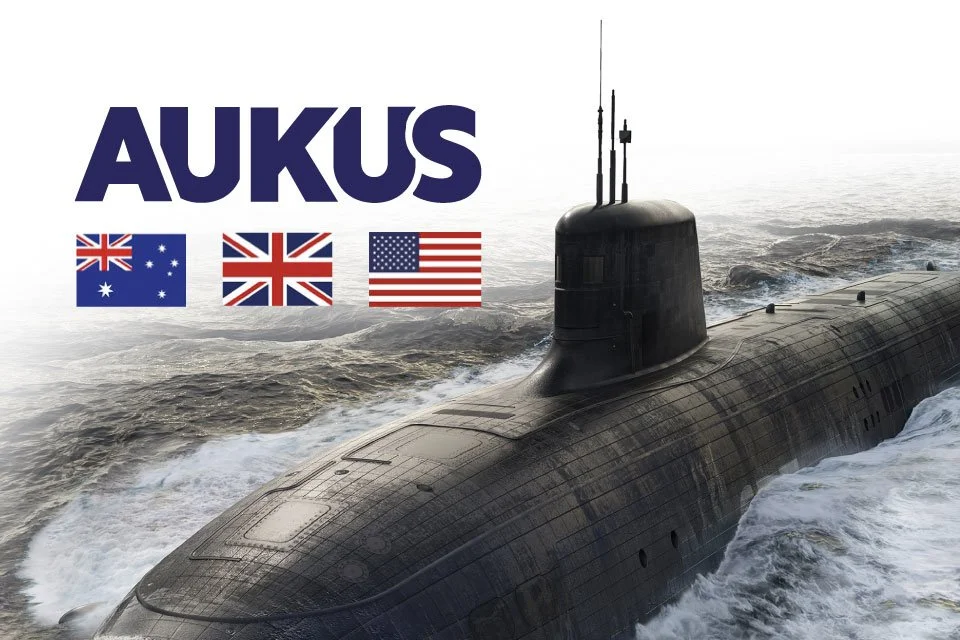
Pillar 1 – Nuclear-powered submarines. Main article: SSN-AUKUS.
Sources and References
Australian Submarine Agency (ASA) — official program updates, workforce strategy and supplier engagement
https://www.asa.gov.auAustralian Government – Minister for Defence — AUKUS announcements, naval nuclear policy and infrastructure investment
https://www.minister.defence.gov.auAustralian Naval Infrastructure (ANI) — shipyard expansion and submarine base development
https://www.navalinfrastructure.gov.auDefence SA — South Australia’s defence and naval nuclear strategy, workforce initiatives and international engagement
https://www.defencesa.comSouth Australian Department for State Development — industrial capability development, skills pipelines and investment attraction
https://www.statedevelopment.sa.gov.auHuntington Ingalls Industries (HII) — Australian Submarine Supplier Qualification program and trilateral supply-chain integration
https://www.hii.comBAE Systems — SSN-AUKUS design leadership, Australian shipbuilding partnership and workforce mobilisation
https://www.baesystems.comBabcock International — submarine sustainment, nuclear stewardship and AUKUS supply-chain participation
https://www.babcockinternational.comRolls-Royce Submarines — nuclear reactor propulsion systems for AUKUS submarines
https://www.rolls-royce.comAustralian Naval Institute — independent analysis on naval nuclear capability and workforce requirements
https://www.navalinstitute.org.auNuclear Threat Initiative (NTI) — nuclear governance, stewardship and non-proliferation frameworks relevant to naval nuclear operations
https://www.nti.orgWorld Nuclear News — reporting on nuclear submarine programs, reactor technology and global nuclear developments
https://www.world-nuclear-news.org